
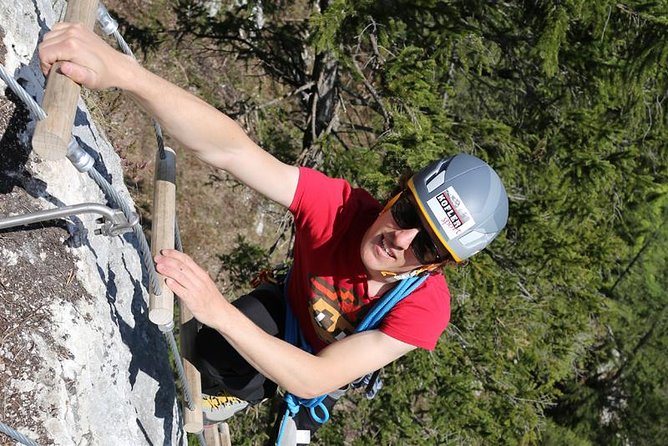
Reviewed · LAKE BLED TOURS
Quick Vertical Attraction – Via Ferrata Mojstrana
Mojstrana’s two via ferrata routes let you test yourself on real rock without bringing a rack of climbing gear. The easier Aljaževa route suits beginners and families, while the Mojstrana Squirrels route adds steeper, harder sections for climbers with some experience.
I like the way the price includes technical equipment, guiding, and local transfers, so you can treat this as a ready-made mountain outing. I also like the careful instruction: guides such as Gregor, Cveto, Anita, and Igor explain the equipment, run a short practice session, and keep an eye on each climber.
The main consideration is physical effort. Even the family route requires a strong level of fitness, and the grade C/D route calls for skill, strength, and comfort with heights. Weather can also change the plan, so keep some flexibility in your schedule.
Key points to know before you climb
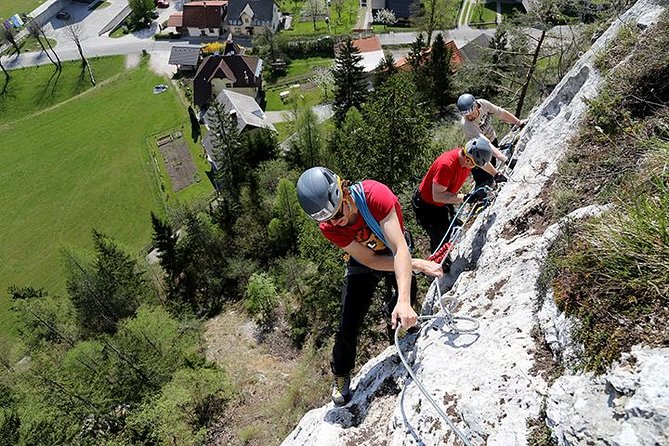
- Two routes at one wall: Choose the grade B Aljaževa route or the grade C/D Mojstrana Squirrels route.
- A short approach: Both routes share a very short access path from Kofler Sport to the wall.
- Gear is supplied: Helmet, climbing belt, and self-belaying system are included in the rental.
- Mountain views from Grančišče: Both routes finish on Grančišče hill, with views toward the Julian Alps and Karavanke.
- Family age range: Children can join from age seven if they are at least 125 centimeters tall.
- Pickup covers the area: Transfers are offered from accommodation between Kranjska Gora, Mojstrana, and Jesenice, with Bled pickup also available as stated in the tour details.
What this Mojstrana climbing experience really offers
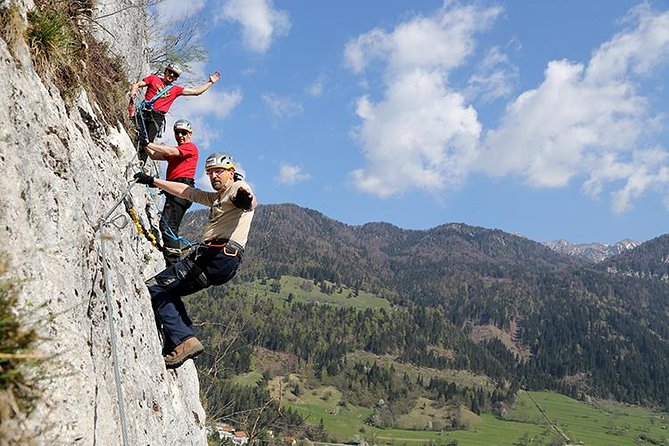
Via ferrata means iron path in Italian. You move along a protected climbing route using fixed cables, metal steps, and your own safety system. It sits between hiking and rock climbing: you do not need to place protection or carry technical climbing equipment, but you still need to use your hands, feet, and judgment.
This outing takes place in Mojstrana, a useful base near the mountain resorts of Kranjska Gora and Bled. The activity itself lasts about three hours, enough time for equipment, instruction, the climb, and the walk back down without turning the day into a full alpine expedition.
You meet at Kofler Sport at Savska cesta 1 in Mojstrana. The activity begins at 8:30 am, and the outing returns to the agency. If you are staying in Kranjska Gora, Mojstrana, or along the route toward Jesenice, pickup can make the morning much easier. Pickup from other places costs extra, so check the arrangement before booking.
The agency has a clear view of both routes from its location. That is useful because you can discuss the options before committing to one. If your group includes mixed ages or mixed confidence, ask the guide how to divide the day. The routes share the same access and summit area, but they are not equal in difficulty.
More lake bled tours in Lake Bled:
- From Ljubljana: Trip to Lake Bled and Bled Castle
★ 4.7 · 1,426 reviews - From Zagreb: Ljubljana and Lake Bled Tour
★ 4.8 · 1,021 reviews - Ljubljana: Savica Waterfall, Lake Bohinj, and Lake Bled Tour
★ 4.9 · 1,015 reviews
The short approach and first safety lesson
The approach to the wall is very short. That matters more than it might seem. You are not spending the first hour hiking uphill in a harness before reaching the main event. Instead, the guide can focus your energy on fitting the equipment and learning the basic system.
Kofler Sport provides the technical kit. Expect a helmet, climbing belt, and self-belaying system. You do not need to bring your own via ferrata equipment, though you should still arrive in suitable outdoor clothing and footwear. The supplied information specifically recommends basic mountaineering equipment, and the agency rents it as part of the experience.
The instruction is one of the strongest parts of the outing. Gregor has been described as explaining not only how to use each piece of equipment, but also why some equipment is unsuitable for via ferrata climbing. That is a useful distinction for anyone who hopes to tackle other protected routes later.
You also get a short practice section before the main ascent. This gives you a chance to clip and move before the rock becomes more exposed. Guides have worked with first-time climbers, children, people nervous about heights, and participants taking a formal via ferrata course.
Listen closely during this stage. The self-belaying system is simple once you understand it, but it deserves your full attention. A guide may also adjust the route choice after seeing how confidently you move during practice.
Aljaževa route, the grade B family option
The Aljaževa route is the easier of the two choices. It is rated grade B, reaches about 180 meters in height, and runs for roughly 250 meters. The route is intended for families and people who are still new to rock.
Grade B does not mean effortless. You still climb rather than simply walk, and you need to manage your balance while using the fixed cable. The height can feel serious if you are not used to exposed mountain terrain. For a first via ferrata, though, this is the sensible starting point.
I would choose Aljaževa for a family group with children, a first attempt, or anyone unsure how they will react to height. It also works well if your main goal is to learn safe movement rather than chase the hardest available section.
The minimum age is seven, with a stated minimum height of 125 centimeters. That rule is clear, but it does not replace a parent’s judgment. A child may meet the height requirement and still lack the strength, focus, or comfort needed for the route.
Guides have taken families with teenagers and an eight-year-old, and they have adjusted the experience to keep the group moving safely. The instruction can also help you decide which future ferratas suit your ability. That makes the easier route useful as both an outing and a first lesson.
Mojstrana Squirrels route, the grade C/D challenge
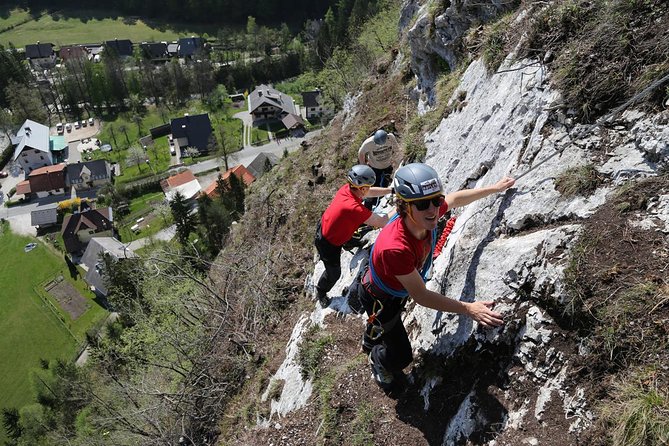
The second route is called the Mojstrana Squirrels route. It is rated grade C/D, reaches the same approximate 180-meter height, and covers about 250 meters. It is intended for people with some prior experience who want a stronger physical and mental challenge.
The difference between grade B and grade C/D is important. The harder route requires more skill and physical strength, not just enthusiasm. You should already be comfortable clipping into a fixed cable, placing your feet carefully, and pulling with your arms when the rock demands it.
This route is the better pick for experienced climbers or anyone who has completed easier ferratas and wants more adrenaline. It may not be the right choice for a first climb, especially if you are uneasy with exposure or have limited upper-body strength.
Groups can sometimes include people with different ability levels. The harder sections may suit the more experienced members while others use an easier line. Your guide can help you make that choice, but do not treat the split as a competition. The best route is the one that lets you move steadily and safely.
The climbing is relatively short at 250 meters, so do not book this expecting a day-long alpine route. Its value comes from concentrated practice, a clear physical challenge, and the chance to reach a mountain viewpoint in a few hours.
Same country, a completely different kind of day:
- Slovenia in One Day: Lake Bled, Postojna Cave and Predjama Castle
★ 5.0 · 879 reviews - Ljubljana: Lake Bled and Bohinj Tour with Savica Waterfall
★ 4.8 · 818 reviews - From Zagreb: Ljubljana and Lake Bled Guided Day Trip
★ 4.9 · 723 reviews - From Ljubljana: Lake Bled & Postojna Cave with Entry Tickets
★ 4.8 · 694 reviews
Reaching Grančišče and walking back down
Both routes bring you to the top of Grančišče hill. From there, you can look toward the Julian Alps and the Karavanke. The views give the climb a proper mountain reward, rather than ending at a wall and sending you straight back to town.
The summit is also a good place to pause and let the experience settle. You may have started by concentrating on every clip and foothold. At the top, you can pay attention to the wider setting and see how the protected route fits into the hills around Mojstrana.
The return follows a marked path almost to the starting point. This is one reason the three-hour format works well. You climb up the protected route, then descend on foot instead of repeating the technical sections.
The supplied details do not give the exact length or steepness of the descent. Expect a mountain walk, not a paved stroll. Wear footwear with a secure grip, and remember that tired legs can make the way down less comfortable than the climb.
One useful local touch comes from a group that finished by cooling their feet in the clear Soča River near the meeting point. Treat that as an optional idea rather than a guaranteed part of the tour, but it shows how easily the outing can fit into a wider day around Mojstrana.
Guides who focus on safe movement
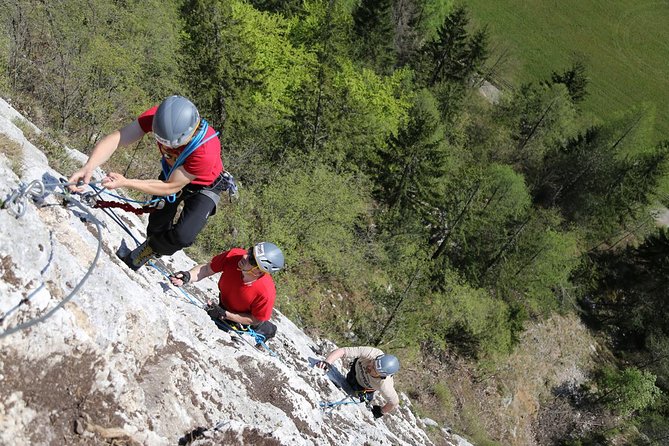
The guide makes a real difference on an activity like this. Gregor has guided first-timers and mixed groups, explaining the gear in detail and checking that English-speaking participants understood the instructions. He also took photos during one ascent for the group to share later.
Cveto has been praised for handling communication and timing around changing weather. That matters in the mountains, where a good guide needs to make sensible decisions rather than push ahead simply because the group has arrived.
Anita Kofler leads instruction and training, including courses for people who want to learn proper via ferrata technique. Igor has guided families with teenagers and an eight-year-old, with a strong focus on safety.
The listed language is English. The guide team also includes local Slovenian speakers, and the practical experience described by participants shows that English instruction is available during equipment checks and the climb.
The group limit is 15 people. That is not a tiny private outing, so ask about the expected group size if personal coaching is important to you. The minimum booking is two people, which rules out a solo reservation.
Is $108.43 a fair price?
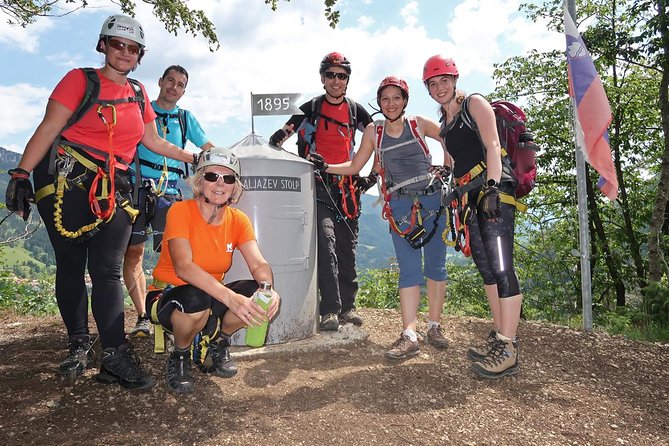
At $108.43 per person, this is not the cheapest way to spend three hours in the mountains. It is also more than a simple guided walk. The fee includes the technical equipment rental, transfers from the stated pickup area, and guiding.
That package can be good value if you are staying without a car or do not own a helmet, harness, and self-belaying system. You avoid buying gear for one outing and do not need to work out the route or safety system on your own.
The value is strongest for a first-time climber. You get instruction before the ascent, a choice between two grades, and help from a guide who can adjust the plan to ability and weather. The price is less compelling if you already own the equipment, know the route, and have solid experience climbing independently.
Food and drinks are not included. Plan a snack and water for before or after the climb. The activity is short, but physical work on rock can leave you hungry.
The 100 percent recommendation rate and five-star score across 27 ratings suggest very strong satisfaction, but I would still read the conditions carefully. This is an active mountain experience, not a sightseeing ride, and the physical requirements should guide your decision more than the score.
Who should book, and who should think twice?
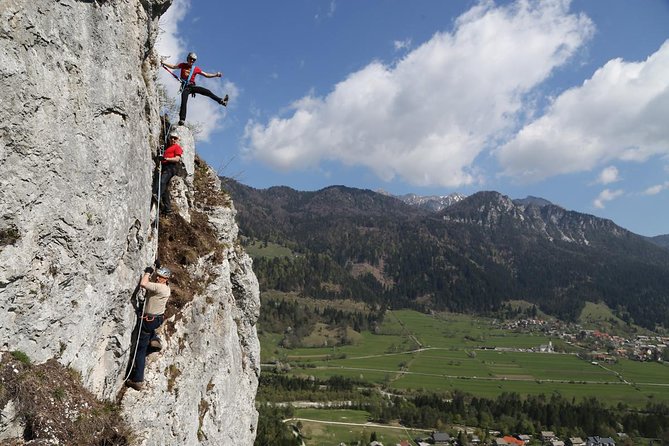
I would recommend the Aljaževa route to families with suitable children, first-time climbers, and active people who want an introduction to via ferrata. It is also a good choice for a group that wants professional instruction before attempting more demanding protected routes in the Julian Alps.
The Mojstrana Squirrels route is better for people with previous via ferrata or climbing experience. You need strength and confidence, and you should be ready for a route rated C/D.
This experience suits you if you like a compact outdoor activity with real instruction and a clear summit goal. It is less suitable if you dislike heights, have a low fitness level, want a relaxed walk, or need a fully predictable schedule in poor weather.
The guides can help people who are afraid of heights feel more secure, but no guide can remove the basic nature of the activity. You will still be on a rock face, attached to a cable, using your body to climb.
Book with the weather in mind. You can cancel for a full refund up to 24 hours before the start time. If bad weather forces the operator to cancel, you can choose another date or receive a full refund. Changes made inside 24 hours are not accepted, so leave room in your plans.
My call on the Mojstrana via ferrata
I would book this if I wanted a guided first step into via ferrata near Bled or Kranjska Gora. The short approach, supplied gear, clear route choices, and experienced instruction remove much of the guesswork.
Choose Aljaževa if you are new, bringing children, or uncertain about heights. Choose Mojstrana Squirrels only if you already have the skill and strength for grade C/D terrain. At $108.43, the outing earns its price through equipment, transport, and hands-on guidance, not through a long duration.
For a three-hour mountain adventure with Julian Alps and Karavanke views, this is a focused and practical choice. Just arrive fit, listen carefully, and let the guide decide if the weather has other plans.
FAQ
Where does the via ferrata experience start?
It starts at Kofler Sport, Savska cesta 1, 4281 Mojstrana, Slovenia. The activity ends back at the agency in Mojstrana.
What time does the activity begin?
The stated start time is 8:30 am.
Is pickup available from Bled?
Pickup and drop-off are offered from accommodation in Kranjska Gora, Mojstrana, and Bled. The details also state that the pickup range runs from Kranjska Gora to Jesenice, while other pickup locations may cost extra.
Which via ferrata route is best for beginners?
The Aljaževa route is the easier option. It is rated grade B and is intended for families and people new to rock climbing.
How difficult is the Mojstrana Squirrels route?
The Mojstrana Squirrels route is rated grade C/D. It is intended for people with some previous experience and requires skill and physical strength.
What equipment is included?
Technical equipment rental is included. The recommended equipment is a helmet, belt, and self-belaying system.
Can children join the activity?
Children can join from age seven and must be at least 125 centimeters tall. The activity also requires a strong level of physical fitness.
What happens if the weather is bad?
The experience requires good weather. If the operator cancels because of poor weather, you can select a different date or receive a full refund.
Just added around Lake Bled
- Zagreb: Lake Bled and Ljubljana Day Tour with Chocolate Gift★ 5.0 · 26 reviews
- Triglav National Park: Emerald River Adventure by 3glav★ 5.0 · 3 reviews
- Snowshoeing in Triglav National Park★ 5.0 · 4 reviews
- From Ljubljana to lake Bled – Slovenia Tourist Taxi★ 5.0 · 44 reviews
- Postojna cave, Predjama castle and Lake bled from Ljubljana★ 4.5 · 29 reviews
- Lake Bled Half Day Excursion from Ljubljana★ 4.0 · 14 reviews
- Lake Bled Fairytale Half-Day Tour with Local Guide★ 5.0 · 5 reviews
- Lake Bled & Postojna cave in one day | Private trip from Ljubljana★ 5.0 · 4 reviews
Lake Bled Tours, compared.
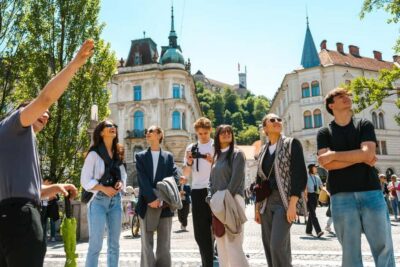
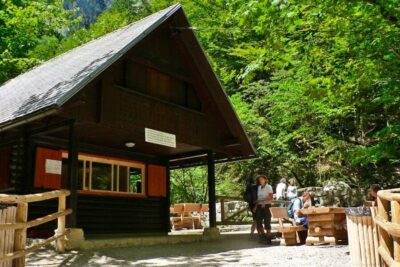
Savica Waterfall, Lake Bohinj, and Lake Bled Tour
Read our review →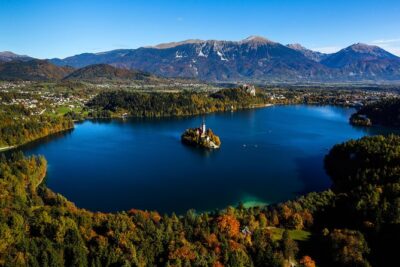
Slovenia in One Day: Lake Bled, Postojna Cave and Predjama Castle
Read our review →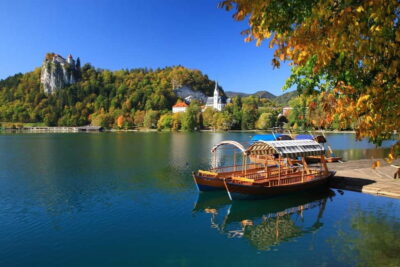
Lake Bled and Bohinj Tour with Savica Waterfall
Read our review →
Browse the lists this tour appears in