
Reviewed · WALKING TOURS
Plečnik’s Ljubljana -UNESCO heritage- A walk among architect Plecnik’s creations
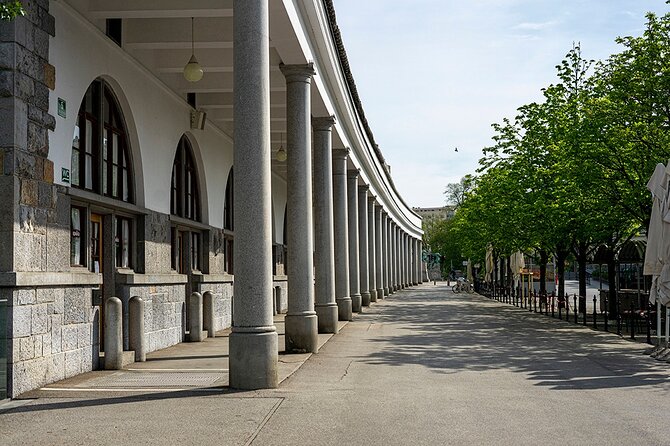
Jože Plečnik reshaped Ljubljana with bridges, columns, lamps, arcades, and grand public spaces that feel both practical and playful. This two-hour private walk follows his work from the Triple Bridge through the market and riverfront to Križanke and the National and University Library. I like the clear focus on one architect and the small tastings that connect the buildings with local life.
I also like the private format. You can ask questions without holding up a larger group, and a guide such as Tjasa can adjust the conversation for everyone from an architecture student to someone simply curious about the city. The main consideration is pace: the walk includes several stops in two hours, so it gives you a strong introduction rather than a slow, detailed visit inside each site.
Key points to know
- Plečnik’s city in one compact walk: Follow his work from the Triple Bridge to Križanke and the National Library.
- A private group of up to six: The $220.41 group price becomes far better value when shared by several people.
- Small local tastings included: Snacks add a personal link to Ljubljana and its residents.
- Mostly an outdoor architecture tour: The route focuses on streets, squares, bridges, and exterior details.
- A central start and historic finish: Begin at Krekov trg and finish at Križanke, near the French Revolution Square.
- A guide-led experience: You learn about Plečnik’s life and work rather than simply photographing buildings.
Why Plečnik is the right guide to Ljubljana
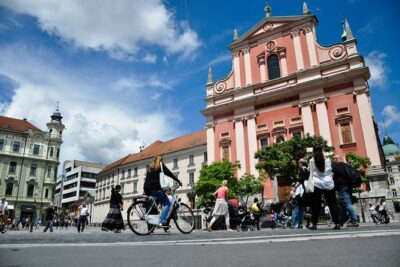
Jože Plečnik gave Ljubljana much of the visual character you notice on a first walk through the center. His work does not sit in one isolated museum district. It appears in the way the river is crossed, how the market is arranged, how a square frames a view, and how a public building meets the street.
That makes this tour useful for you if you want more than a checklist of famous places. A bridge becomes part of a larger city plan. A market becomes architecture as well as commerce. A library becomes a carefully designed civic statement.
The focus is also manageable. You are not trying to cover every period of Ljubljana’s past in one morning. Instead, you spend about two hours looking at one architect’s ideas and the way those ideas changed the city.
The tour is offered in English, with a professional local guide. Tjasa is specifically praised for making the walk memorable and for going beyond a basic explanation. The guide’s personality matters here because Plečnik’s details can be easy to miss if you only walk past them.
A few more Ljubljana trips to weigh up
- From Ljubljana: Piran Trip with Historic Walking Tour
★ 4.7 · 91 reviews - Historic Ljubljana Tour with Ljubljana Castle included
★ 5.0 · 11 reviews - Ljubljana Private Family-Friendly Historic Old Town Guided Tour
★ 5.0 · 6 reviews
Starting at the Triple Bridge
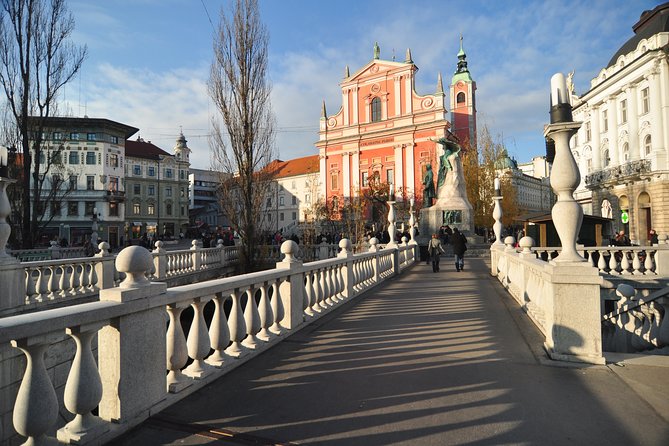
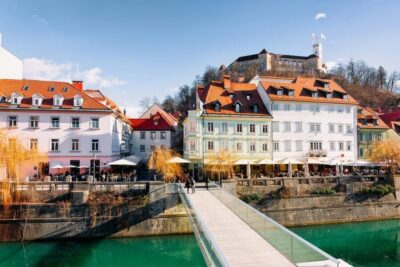
The walk begins at Krekov trg, a convenient central meeting point, then reaches the Triple Bridge, or Tromostovje. This is one of Ljubljana’s most recognizable views, and it is a smart place to begin because it shows Plečnik solving a real city problem with an elegant design.
The bridge has three crossings, but only two were made by Plečnik. That small fact is worth hearing on site because it reminds you that the city grew over time. Plečnik adapted an existing crossing rather than treating the riverfront as a blank sheet.
You get about five minutes here. That is enough to introduce the design and take in the relationship between the bridge, the river, and the surrounding center. It is not enough for a long architectural lecture, so ask questions if you want to know more about the two Plečnik additions or how the crossing fits into the city.
This first stop also sets the tone for the whole walk. You are looking for repeated design choices, not just one famous monument. Columns, lighting, open space, and movement across the river will keep returning as the tour continues.
Walking the two-level Central Market
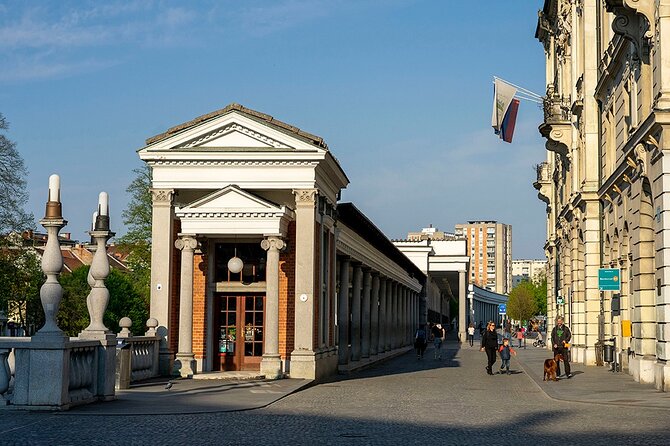
From the Triple Bridge, the route follows a particularly interesting stretch toward Dragon Bridge and the Central Market. The market area shows Plečnik working at two levels, an arrangement that gives the riverfront more structure than a simple row of stalls or shops.
You can expect around ten minutes here. The stop is brief, but the setting gives your guide plenty to point out. Look at how the market connects everyday shopping with the river and the public paths around it. This is one of the tour’s best chances to see architecture serving ordinary city life.
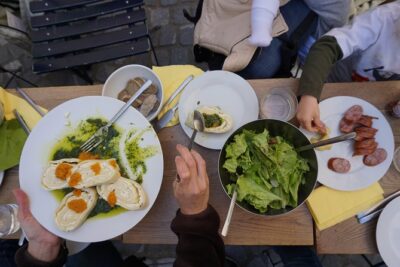
The word market can make a place sound purely functional. Plečnik’s treatment asks you to notice the setting, the movement, and the relationship between the upper and lower parts of the area. Small local tastings are included along the route, and this is a fitting point to think about how food and public space belong together in Ljubljana.
The tour does not promise a full food tour, and the snacks are described as little tastings rather than a meal. You should treat them as a pleasant addition to the walk, not a reason to arrive hungry. Their value is the connection they create between Plečnik’s city and the people who use it.
Crossing the river at Shoemaker’s Bridge
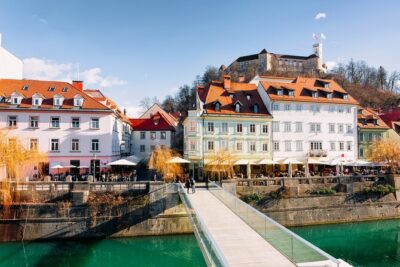
Shoemaker’s Bridge, or Cevljarski Most, takes the tour back to the river itself. Here, Plečnik’s lights and distinctive columns become the main subject.
You get about five minutes at this stop. That sounds short, but bridge design is best understood while you stand on it. You can see how the columns shape the crossing and how the lights add a visual rhythm along the river.
This is also a useful contrast with the Triple Bridge. The earlier stop presents a more famous, instantly recognizable view. Shoemaker’s Bridge gives you a closer look at the smaller decisions that make Plečnik’s work feel consistent across Ljubljana.
If you are interested in architecture, this may be one of the places where you want to pause and study the details. If your group is more interested in general sightseeing, the guide can keep the explanation moving. Since the tour is private, you have more room to signal which direction you prefer.
Same country, a completely different kind of day:
- Ljubljana: Postojna Cave & Predjama Castle Tickets and Tour
★ 4.9 · 2,146 reviews - From Ljubljana: Trip to Lake Bled and Bled Castle
★ 4.7 · 1,426 reviews - Postojna Cave and Predjama Castle – Entrance Tickets Included
★ 5.0 · 938 reviews - Slovenia in One Day: Lake Bled, Postojna Cave and Predjama Castle
★ 5.0 · 879 reviews
Reading Ljubljana at Congress Square
Congress Square, or Kongresni trg, is the next major pause, with about ten minutes devoted to it. Plečnik changed the square, and it has hosted one of the largest events ever held in Ljubljana.
That combination gives the place two layers. You see the physical design of the square, but you also learn how a public space can become a stage for civic life. A large square is never only about paving and buildings. It is also about gatherings, ceremonies, and the way a city presents itself.
This stop is especially helpful if you like connecting architecture with politics and public life. The guide can explain what Plečnik changed and why the square mattered during a major event. The supplied details do not specify the event, so ask for that context if it interests you.
Congress Square also breaks up the riverfront section of the walk. You move from bridges and market structures to a broad urban space. That change helps show that Plečnik was not designing isolated objects. He was shaping how people moved through and gathered in Ljubljana.
Križanke, Plečnik’s final major Ljubljana work
The walk ends at the Monastery of the Holy Cross Summer Theater, commonly called Križanke. This is described as Plečnik’s last major work in Ljubljana and one of the city’s best outdoor theaters.
You spend about ten minutes here, looking at the theater and its details. The setting combines an older religious complex with Plečnik’s design work, giving the stop a different mood from the bridges and market. Here, the focus is on performance, decoration, and the careful treatment of an existing place.
Križanke is a strong finish because it shows Plečnik late in his career and in a more theatrical setting. The route begins with a practical crossing and ends with architecture designed for public events and outdoor performance.
The tour ends at Križanke, at Trg francoske revolucije 1. That is useful planning information. You do not return to the starting point, so arrange your next activity from the finish rather than assuming you will be back at Krekov trg.
Seeing the National and University Library
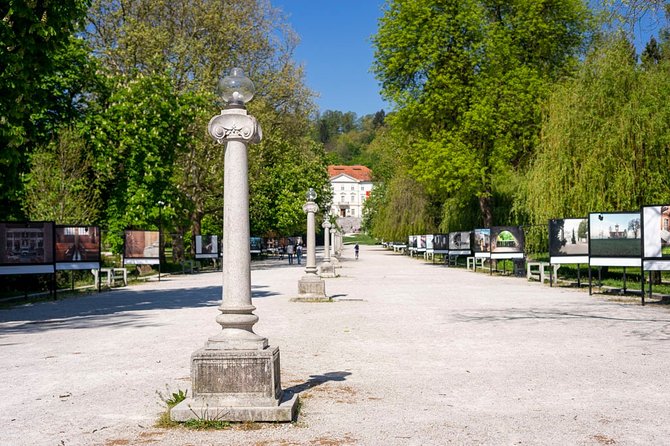
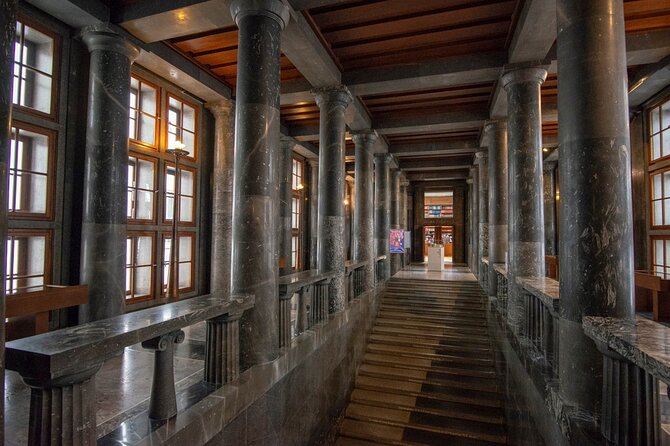
The National and University Library is listed as one of Plečnik’s masterpieces and receives about five minutes on the route. Even with a short stop, it adds an important civic building to the tour.
The library broadens your understanding of Plečnik’s work. Bridges and market spaces shape movement in the open air. A library represents learning, scholarship, and public purpose. Seeing both helps you understand the range of his work in Ljubljana.
The available details do not say that the tour enters the library, so plan on an exterior-focused visit unless your guide tells you otherwise. Five minutes is enough to introduce the building and its role in Plečnik’s Ljubljana, but not to explore the interior at length.
Depending on the exact walking order, the library may be visited before Križanke, as listed for this route, with Križanke serving as the final endpoint. Check the guide’s plan at the start if the order matters to you.
What the two-hour timing really means
The listed stops total about 45 minutes: five minutes at the Triple Bridge, ten at the Central Market, five at Shoemaker’s Bridge, ten at Congress Square, ten at Križanke, and five at the library. The remaining time covers walking between locations, explanations, questions, and the snack tastings.
That is a sensible structure for a first look at central Ljubljana. You keep moving and see several key places without giving up a whole day. At the same time, you should not expect a slow specialist seminar at every building.
I would choose this tour early in your stay. It gives you a framework for later walks. Once you know what Plečnik was trying to do with bridges, lights, columns, and public spaces, you will notice those choices again on your own.
Good weather matters because the experience is a walking tour with substantial outdoor time. If poor weather forces cancellation, you can accept a different date or receive a full refund. Free cancellation is available when you cancel at least 24 hours before the start time, while later cancellations and changes are not refunded or accepted.
Is $220.41 a fair price?
The price is $220.41 per private group of up to six people. Shared by six, that is about $36.74 per person. For four people, it is about $55.10 each, and for two people, about $110.21 each.
That makes the tour strongest for a family or small group that wants a private guide. You are paying for the guide’s time, a route built around one subject, local tastings, and the freedom to ask questions within your own group. The value drops if only one person books, since the price is per group rather than per guest.
You also avoid paying separate admission fees for the listed stops, which are shown as free-entry locations. The main value is not ticket access. It is the explanation and the way the sites are connected into one story.
If you only want a quick orientation to Ljubljana, the price may feel high for two hours. If architecture is a major reason for your visit, or if you want a personal guide rather than a general city walk, the private setup makes more sense.
Who will enjoy this Plečnik walk most?
I would recommend it to anyone curious about how a city is designed. You do not need an architecture degree. One of the strongest details from the feedback is that the tour worked for a family with an architecture student and another person considering a change of major. That suggests the guide can speak to serious interest without making the walk inaccessible to beginners.
It also suits parents and adult children, couples, and small groups who prefer conversation over a fixed large-group format. The guide can explain Plečnik’s work and offer advice on what else to do in Ljubljana or Slovenia after the walk.
You should choose something else if you want extensive indoor visits, a full meal, or a broad survey of every major period in Slovenian history. This is a focused outdoor architecture walk, not a general city tour or food excursion.
Pickup is offered, and the meeting point is central at Krekov trg. The route is near public transportation, service animals are allowed, and most people can participate. Since the activity is private, only your group takes part.
My recommendation for booking
Book this walk if you want to understand why Ljubljana looks the way it does, not just photograph its most famous bridge. The route packs Plečnik’s riverfront, market, square, theater, and library work into two hours, while the tastings and local guidance keep it connected to everyday life.
I especially like it for a first or second day in the city. You will leave with a better eye for details and useful suggestions for the rest of your time in Slovenia. Book with a group of four to six for the best price, and make sure everyone is ready for an outdoor walk in good weather.
Skip it if your main goal is a long, unhurried visit inside the National and University Library or Križanke. For a focused, private introduction to Plečnik’s Ljubljana, though, this is a well-shaped and practical choice.
FAQ
Where does the tour begin?
The tour begins at Krekov trg, 1000 Ljubljana, Slovenia.
Where does the tour end?
The tour ends at Križanke, Trg francoske revolucije 1, 1000 Ljubljana, Slovenia.
How long does the tour last?
The walk lasts approximately two hours.
Is the tour private?
Yes. It is a private activity, and only your group participates.
How many people can join?
The price covers a group of up to six people.
Is the tour offered in English?
Yes. English is one of the available tour languages.
What happens if the weather is poor?
The experience requires good weather. If it is canceled because of poor weather, you can choose a different date or receive a full refund.
Just added around Ljubljana
- Zagreb: Postojna Cave, Predjama Castle & Ljubljana in a Day★ 3.4 · 11 reviews
- Woop! Fun park with 21 attractions★ 4.6 · 3 reviews
- Woop! Glow golf: Ljubljana Btc City★ 4.8 · 14 reviews
- Gokart experience at Woop! karting – the fastest attraction★ 4.0 · 5 reviews
- Trieste: Ljubljana Capital of Slovenia Tour★ 4.5 · 12 reviews
- Private Zagreb Tour from Ljubljana★ 4.5 · 3 reviews
- rafting on sava river in bled slovenia, the best rafting trip in the area★ 5.0 · 14 reviews
- Private Fun Park activity in Ljubljana★ 4.5 · 3 reviews
Walking Tours, compared.
Guided Walk & Funicular Ride to Ljubljana Castle
Read our review →
Piran Walking Tour with Local Wine and Food Tasting
Read our review →
Ljubljana 2Hours and 30Minute Walking Tour with Local Guide
Read our review →Browse the lists this tour appears in