
Reviewed · WALKING TOURS
Ljubljana private walking tour with a local
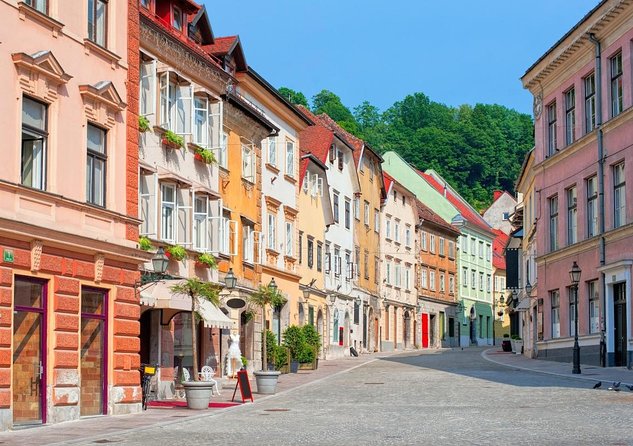
Ljubljana’s Old Town is compact, handsome, and easy to stroll, but its details can slip past you. This private walk gives you a local guide for two hours, linking the food market, riverfront, churches, squares, and Jože Plečnik’s remarkable bridges into one clear story. You get the city’s main sights without being herded through it.
I like the one-to-one format, which lets you ask questions and adjust the pace. I also like the mix of big landmarks and small local details, from Slovenian folklore to the city’s curious milk machine. The main drawback is simple: at $78.64 per person, this costs more than a group walk, and two hours leaves little time for long interior visits.
Key points at a glance
- A private Old Town walk: Only your group takes part, so the guide can respond to your interests and walking speed.
- Plečnik’s Ljubljana in one outing: See the architect’s Triple Bridge, Shoemaker’s Bridge, and National and University Library.
- A useful first-day orientation: The route covers the market, river, castle views, major squares, churches, and Dragon Bridge.
- Local life alongside grand buildings: Expect talk about food, folklore, daily customs, punishment practices, and Slovenian history.
- Guides with flexible styles: Peter is frequently praised for his history, stories, recommendations, and warm manner. Milos also leads the walk.
- Plan ahead: The tour is often reserved well before the visit, with an average booking time of 57 days.
Why a private walk works well in Ljubljana
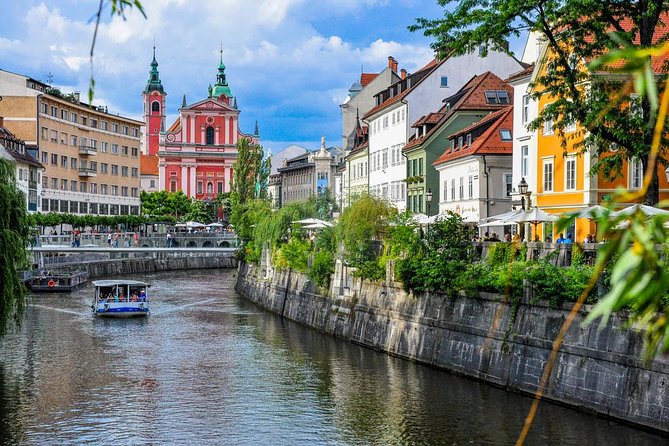
Ljubljana rewards walking. The center is concentrated around the Ljubljanica River, and many of the city’s best sights are close together. A private guide helps you understand how those places connect instead of seeing them as a string of pretty facades.
The format suits a first visit. You can ask why dragons appear on city symbols, how Ljubljana developed, or what Slovenian life is like today. You can also ask for restaurant, café, shopping, or sightseeing suggestions for the rest of your stay.
Peter is the guide most often named in the available feedback, while Milos is also identified as a guide. Peter is described as friendly, punctual, patient with questions, and able to explain complicated periods of Slovenian history in plain English. Several accounts also describe folklore stories, food suggestions, and useful ideas for further visits.
This is not a silent photo walk. The value comes from interpretation. If you want to hear why a bridge has three spans, what happened to dishonest medieval tradesmen, or why France left its mark on Ljubljana, this format gives you room to ask.
A few more Ljubljana trips to weigh up
- Ljubljana: Guided Walk & Funicular Ride to Ljubljana Castle
★ 4.6 · 576 reviews - Ljubljana: Slovenian Cuisine Walking Tour with Tastings
★ 4.8 · 472 reviews - Ljubljana: 2h walking tour with local guide
★ 4.7 · 433 reviews
Starting at the market and Ljubljana Cathedral
The walk begins at the Mouse Fountain in Ljubljana’s Center District and moves toward the Central Market, a natural place to begin understanding the city. The market has operated on this site for about 120 years. You can expect to see fruit, vegetables, flowers, bread, oils, juices, dairy goods, meat, and homemade products brought from different parts of Slovenia.
The market is not treated simply as a backdrop for photographs. Your guide can explain what people buy, how local produce reaches the city, and the difference between everyday shopping and tourist browsing. One especially unusual detail is the milk machine, a small reminder that Slovenian food traditions can be practical as well as picturesque.
The market stop lasts about 10 minutes, and admission is included. That is enough for an introduction, but not enough for a full food-shopping session. If the market interests you, ask your guide for extra time or return independently after the walk.
Next comes the Cathedral of St. Nicholas, where the focus turns to Slovenian Christianity and sculpture. The cathedral’s two notable doors, called the Slovenian Door and the Ljubljana Door, represent important chapters in the country’s religious story. The guide explains their meaning and background.
The cathedral visit is listed at about 10 minutes. Admission is not included, so be prepared to pay separately if you enter. This is one of the few places where the tour’s short length may limit what you see inside. The outside architecture and doors still make the stop worthwhile, but anyone hoping for a long church visit should set expectations accordingly.
Baroque power at Robba Fountain and Town Hall
The Fountain of Three Carniolan Rivers, usually called the Robba Fountain, brings you into Ljubljana’s Baroque period. Your guide discusses the fountain’s artistic and historical importance, giving you a way to read its figures and design rather than merely admire its decoration.
The stop is brief, about five minutes. That works well for a central landmark you can view from the public square, though it is too short for a detailed art lecture. I like this kind of pause because it keeps the walk moving while adding a useful layer to the city’s appearance.
At the Town Hall, you see the building from outside and part of the interior. Built in the late 15th century, it has housed Ljubljana’s mayors for centuries. That long civic use gives the building more weight than a quick photograph suggests.
The guide connects the building to the way Ljubljana has been governed. You get about 10 minutes here, with free admission listed. Since access inside can be partial, do not expect a full museum-style tour of the building.
Crossing Plečnik’s bridges along the Ljubljanica
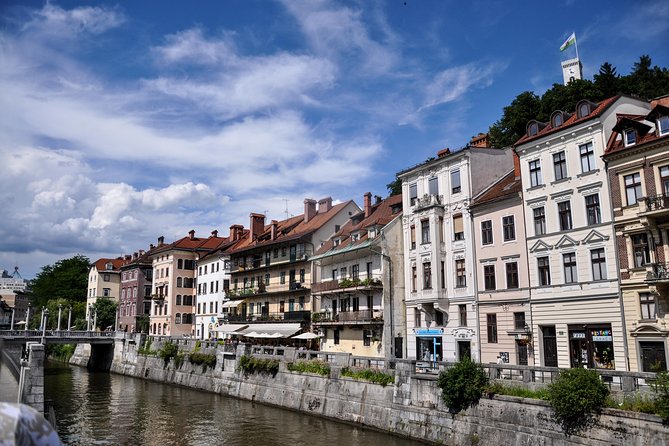
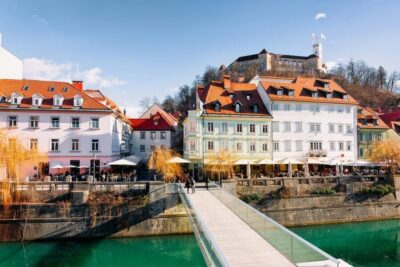
The Ljubljanica is the route’s main thread. The river shaped trade, movement, punishment, and public life, and the walk uses its bridges to tell those stories.
At Shoemaker’s Bridge, you encounter one of Jože Plečnik’s most graceful works. The bridge also carries a darker tale. In the Middle Ages, dishonest butchers and bakers were reportedly punished by being dipped into the river. Your guide explains the connection between the bridge, the judiciary, and the river’s role in city life.
That combination of architecture and odd local detail is one of the tour’s strengths. You learn not only what a bridge looks like, but how people once used the space. The stop lasts about 10 minutes and is free.
Plečnik appears again at the National and University Library, often considered his major architectural challenge in Ljubljana. The building uses strong symbols and unusual forms to express the idea of knowledge. The tour allows about five minutes here, enough to discuss the exterior and the architect’s intentions.
If architecture is your main interest, tell the guide early. The route includes several Plečnik sites, but the short duration means you will hear concise explanations rather than receive a specialist architectural seminar.
Same country, a completely different kind of day:
- Ljubljana: Postojna Cave & Predjama Castle Tickets and Tour
★ 4.9 · 2,146 reviews - From Ljubljana: Trip to Lake Bled and Bled Castle
★ 4.7 · 1,426 reviews - Postojna Cave and Predjama Castle – Entrance Tickets Included
★ 5.0 · 938 reviews - Slovenia in One Day: Lake Bled, Postojna Cave and Predjama Castle
★ 5.0 · 879 reviews
Three layers of history at French Revolution Square
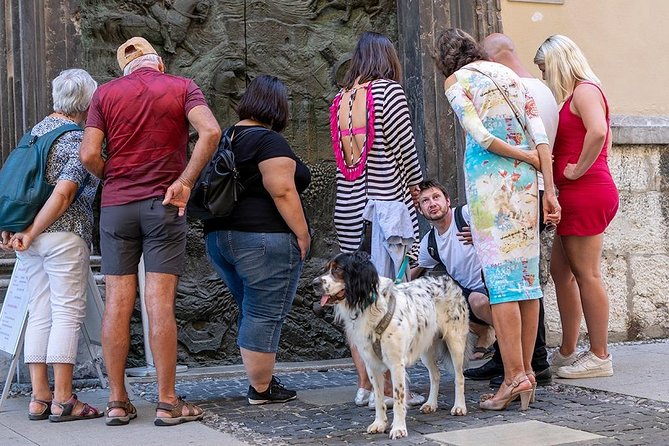
French Revolution Square packs three stories into one setting. Your guide discusses the Teutonic knights and their monastery, Napoleon’s wars and the Illyrian Provinces, and Plečnik’s contribution to the square.
This is a good example of why a guide helps in Ljubljana. The square’s name, buildings, and monuments reflect different periods, but the connections are not always obvious when you walk past on your own. In about 10 minutes, you get a short lesson in medieval religion, Napoleonic rule, and modern Slovenian design.
The stop is free and outdoors. In hot weather, rain, or cold, the pace and comfort will depend on conditions. The guide has adjusted routes and pace for heat, cold, rain, and mobility needs, but you should still wear practical shoes and check the forecast.
Congress Square and the view to Ljubljana Castle
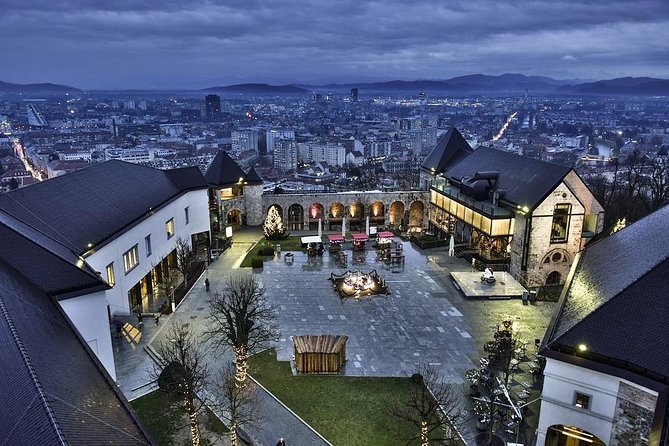
At Congress Square, the route broadens into a city panorama. You see Star Park, the Ursuline Church, the Slovenian Philharmonic building, Ljubljana University, and other important buildings around the square.
The Philharmonic is one of Europe’s oldest institutions of its kind, and the guide explains why the square received its name. You also get a view toward Ljubljana Castle and hear how the castle has served the city since its construction at the end of the 15th century.
This is one of the best orientation points on the walk. You can begin to see Ljubljana as a city shaped by church power, education, performance, government, defense, and public space. The square stop takes about 10 minutes and costs nothing to enter.
The castle itself is not listed as a stop with an included visit. You see it from Congress Square and hear about its history, but you should plan a separate castle visit if you want to go inside.
Prešeren Square and the city’s poetic heart
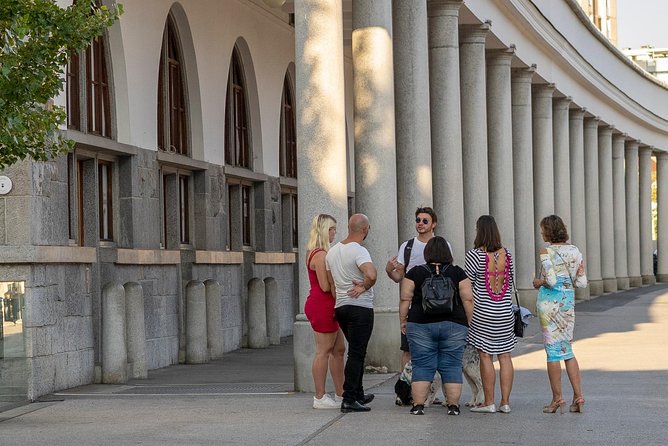
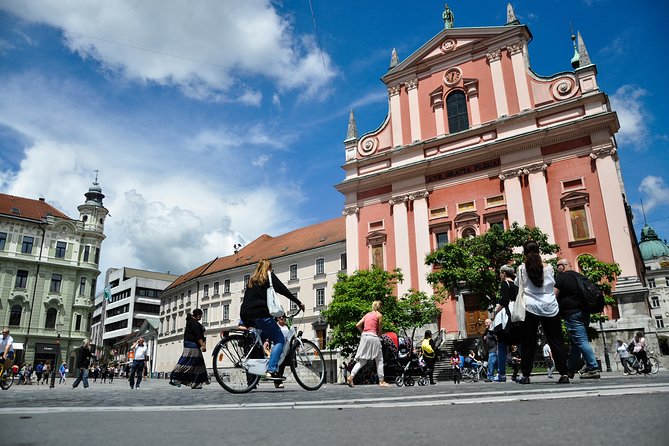
Prešeren Square gathers several of Ljubljana’s most recognizable sights. From here, you can see the Triple Bridge, the pink Franciscan Church, Art Nouveau buildings, and the statue of France Prešeren, Slovenia’s best-known poet.
The guide explains Prešeren’s place in Slovenian literature and the story of his unreturned love. That personal thread helps make the square feel less like a formal monument and more like a place tied to national feeling and human disappointment.
The square is also a strong photography stop. You see several landmarks at once, and the guide can point out details you might otherwise miss. The planned visit lasts about 10 minutes and is free.
The Franciscan Church gets a short look, around three minutes. Its pink Baroque facade recalls Il Gesù in Rome. This is a quick exterior-focused stop, not a long church tour, so allow extra time later if you want to examine the interior.
Triple Bridge, Butcher’s Bridge, and Dragon Bridge
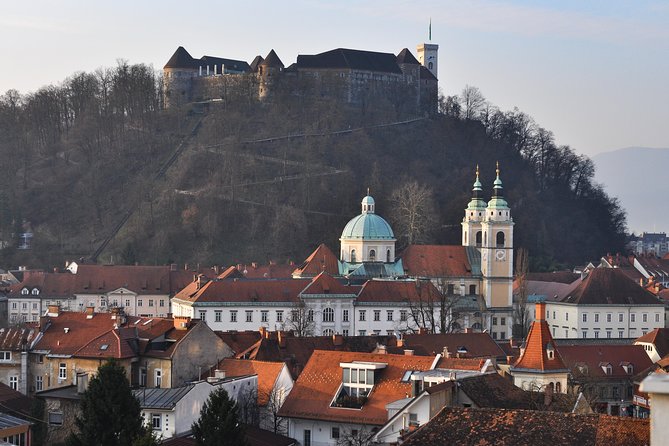
The Triple Bridge is Ljubljana’s signature Plečnik landmark. Three connected spans cross the river, and the guide explains both the bridge’s practical purpose and the symbolism Plečnik liked to place in his designs.
The obvious question is why one bridge needs three crossings. That question becomes a useful entry point into the city’s growth and Plečnik’s way of reshaping older urban spaces. The stop lasts about five minutes, which is enough for the essential explanation and photos.
A short walk brings you to Butcher’s Bridge, a newer crossing with a memorable name and a very different mood. It is also known as the Love Bridge because of the locks attached to it. Grotesque statues decorate the bridge, and the guide explains their meaning as well as why a modern bridge carries a medieval-sounding title.
The stop lasts about 10 minutes and is free. The locks and sculptures give the bridge a playful, slightly strange character. It is a good place to ask about how Ljubljana mixes old symbols with newer public art.
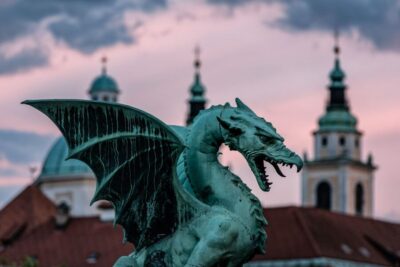
The final major stop is Dragon Bridge, one of the city’s best-known Art Nouveau works. Its dragons have become Ljubljana’s most famous symbol, and the guide explains why the creature belongs to the city’s identity.
You finish at Prešeren Square, even though the route also visits it earlier. That ending puts you back in the center, near one of Ljubljana’s key public spaces. It is convenient for continuing your own sightseeing, though the meeting and end points are not the same, so note the route before setting up another appointment.
What the two-hour schedule feels like
The planned timing adds up to a brisk introduction, with most stops lasting between five and 10 minutes. You cover a lot: the market, cathedral, fountain, Town Hall, three major bridges, the library, French Revolution Square, Congress Square, the castle view, Prešeren Square, and the Franciscan Church.
I would call the pace efficient rather than leisurely. You have time to listen, ask questions, and take photographs, but not to linger at every facade or browse the market in depth. Some people have found two hours enough for a full central-city overview, while others may want more time for architecture or church interiors.
The private setup helps here. Peter has adjusted start times for arrival schedules, picked people up at Old Town residences, and adapted the pace for a participant with mobility concerns. Those details suggest useful flexibility, but you should request changes before the walk rather than assume they are automatic.
The experience is offered in English. It is near public transportation, service animals are allowed, and most people can participate. As with any walking tour, comfortable shoes matter more than fancy gear.
Is $78.64 per person good value?
At $78.64 per person, this is not the cheapest way to see Ljubljana. The price makes the most sense for couples, families, or small groups who want a private guide and the freedom to ask questions. Group discounts may improve the value for a larger party.
You are paying for personal attention, route flexibility, local context, and a guide who can help shape the rest of your stay. Peter has provided suggestions for food, drinks, shops, and later activities, and some people have followed those recommendations successfully.
The value is weaker if you only want a quick orientation and do not care who leads it. Ljubljana’s center is walkable, and you can see many exteriors without paying for a guide. The fee becomes easier to justify if you want history, folklore, architecture, and practical local advice in one concentrated session.
The cathedral entrance is not included, and the castle is viewed from outside rather than visited. Keep those possible extra costs and separate visits in mind when comparing this with a longer or more museum-focused tour.
Who should book this Ljubljana walk?
I would choose this tour for a first visit, especially if you have only a day or two in Ljubljana. It gives you the city’s basic map and helps you decide where to return for a longer look.
It also suits you if you enjoy questions and conversation. The guide can focus more on architecture, food, national history, folklore, or daily life instead of giving every group the same script.
Families and small groups may appreciate the private setting. So may anyone arriving tired or jet-lagged, since the pace can be adjusted more easily than on a large group outing. Cyclists have also used it as a way to gain a sense of place before continuing through Slovenia.
I would hesitate if you want extensive interior access, a slow food tour, or a detailed examination of every building. The route is broad and fast by design. For those interests, use this as an introduction and add separate visits afterward.
Book ahead if your dates are fixed. The experience is often reserved 57 days in advance, and confirmation arrives within 48 hours subject to availability. Free cancellation is available up to 24 hours before the start time. Changes or cancellations inside that window are not refunded or accepted.
Should you book it?
Book this private walk if you want a clear first look at Ljubljana with room for personal questions. The strongest reasons are the compact route, the focus on Plečnik’s work, and the chance to hear about Slovenian culture from a local guide such as Peter or Milos.
Skip it if you prefer exploring alone, plan to spend most of your time inside museums, or want a slow market experience. At two hours, it is best seen as a well-planned introduction, not a complete tour of every attraction. For a first day in Ljubljana, that introduction can be worth the higher private-tour price.
FAQ
How long does the Ljubljana private walking tour last?
The tour lasts approximately two hours.
How much does the tour cost?
The listed price is $78.64 per person. Group discounts are available.
Is this a private tour?
Yes. Only your group participates in the activity.
What language is the tour offered in?
The tour is offered in English.
Where does the tour begin?
The meeting point is the Mouse Fountain in Ljubljana’s Center District, listed at 1000 Ljubljana, Slovenia.
Where does the tour end?
The tour ends at Prešeren Square, at Prešernov trg 1, 1000 Ljubljana, Slovenia.
Does the price include cathedral admission?
No. Admission to the Cathedral of St. Nicholas is not included.
Can I cancel for a full refund?
Yes. You can cancel at least 24 hours before the local start time for a full refund. Cancellations made less than 24 hours before the start are not refunded.
Is the tour accessible by public transportation and suitable for most people?
The tour is near public transportation, allows service animals, and most people can participate. The guide can adjust the pace, including for a participant with mobility issues.
Just added around Ljubljana
- Zagreb: Postojna Cave, Predjama Castle & Ljubljana in a Day★ 3.4 · 11 reviews
- Woop! Fun park with 21 attractions★ 4.6 · 3 reviews
- Woop! Glow golf: Ljubljana Btc City★ 4.8 · 14 reviews
- Gokart experience at Woop! karting – the fastest attraction★ 4.0 · 5 reviews
- Trieste: Ljubljana Capital of Slovenia Tour★ 4.5 · 12 reviews
- Private Zagreb Tour from Ljubljana★ 4.5 · 3 reviews
- Private Fun Park activity in Ljubljana★ 4.5 · 3 reviews
- rafting on sava river in bled slovenia, the best rafting trip in the area★ 5.0 · 14 reviews
Walking Tours, compared.
Guided Walk & Funicular Ride to Ljubljana Castle
Read our review →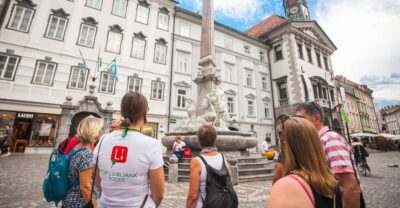
Piran Walking Tour with Local Wine and Food Tasting
Read our review →
Ljubljana 2Hours and 30Minute Walking Tour with Local Guide
Read our review →Browse the lists this tour appears in