
Reviewed · HISTORICAL TOURS
Trieste: History of Prosecco and the Karst Region
Prosecco began as a place before it became a bottle. This trip takes you to the village that gave the famous sparkling wine its name, then across the Karst region to medieval Štanjel and its remarkable Ferrari Garden. I like the wine tasting at a family-run winery and the local food spread, especially the dry-cured ham, cheese, olive oil, and potica. I also like that guides such as Dean Tadic and Ernest bring real knowledge of Trieste, Slovenia, and the border region to the drive.
The main thing to watch is the timing. The tour is advertised as seven hours, but one booking finished after about five hours, leaving two hours that could have been used for more time in Slovenia. At $149 per person, the price makes the most sense if your guide gives you a full day of transport, food, wine, and history rather than a quick tasting run.
Key points at a glance
- Prosecco before the sparkling wine: Visit the village connected with the name of one of Italy’s best-known sparkling wines.
- A family winery tasting: Sample sparkling wine and local products in an informal setting, with food served as part of the experience.
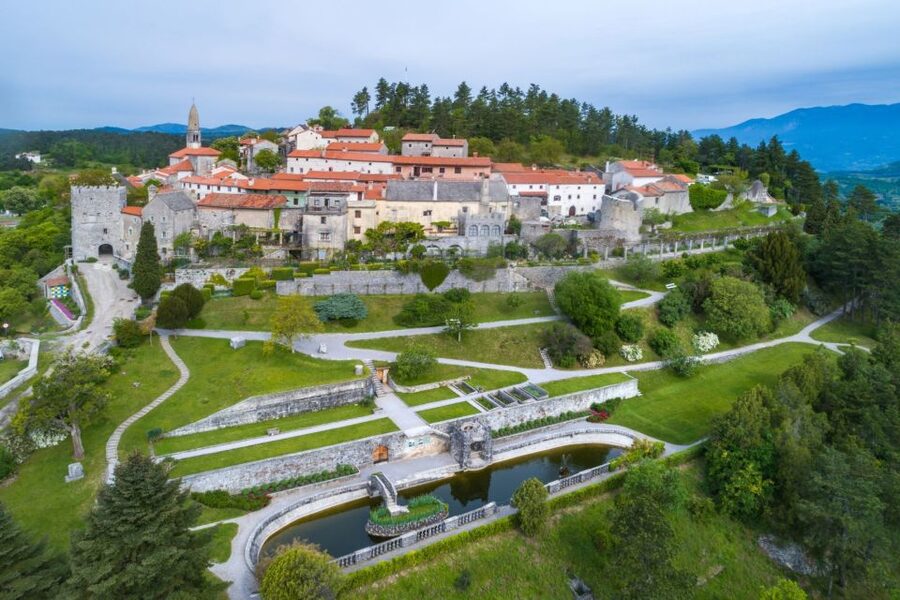
- Štanjel’s hilltop setting: Walk through one of the oldest communities in the Karst region and take in its broad views.
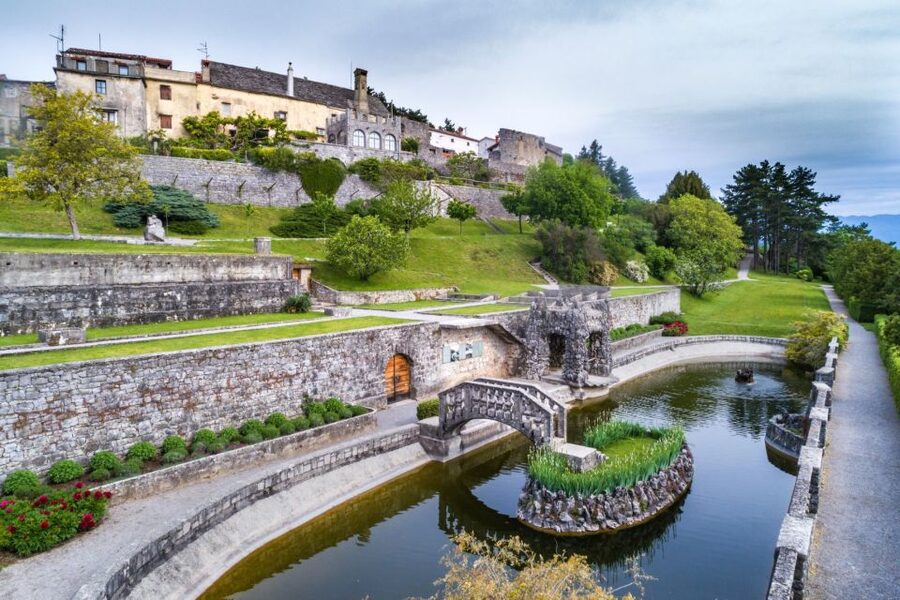
- Maks Fabiani’s garden: See the Ferrari Garden, one of Slovenia’s most important park designs from the interwar period.
- Strong guiding: Dean Tadic and Ernest have been especially praised for clear explanations, local history, and a friendly manner.
- A flexible booking choice: Pickup, transport, insurance, tastings, and free cancellation up to 24 hours ahead are included.
Why this trip is different from a standard wine outing

Many wine tours focus on the glass in front of you. This one gives the wine a sense of place. You begin in Prosecco, the village associated with the name of the sparkling wine, then continue into the Karst, a stony plateau with its own food traditions, villages, and architectural style.
I like that the day is not built around tasting alone. You get a story about vineyards, a visit to a winery, a medieval settlement, a designed garden, and a meal-sized selection of regional food. That mix gives you a better reason to leave Trieste than simply looking for another bottle to take home.
The experience also works well for anyone staying in Trieste who wants to see more of the surrounding region without arranging a rental car. Your guide handles the driving and explains the places along the way. Since the tour is in English, you can ask questions as the day develops rather than trying to piece the area together from signs and guidebooks.
A few more Slovenia trips to weigh up
- From Ljubljana: Piran Trip with Historic Walking Tour
★ 4.7 · 91 reviews - Historic Ljubljana Tour with Ljubljana Castle included
★ 5.0 · 11 reviews - Ljubljana Private Family-Friendly Historic Old Town Guided Tour
★ 5.0 · 6 reviews
Leaving Trieste for the village of Prosecco
Pickup is available from a central point in Trieste, in front of Hotel Savoia Excelsior Palace on Riva del Mandracchio 4, close to Piazza Unità d’Italia. Cruise passengers can be collected at the Trieste cruise terminal, which makes this a useful option if you have a port day and want to see inland sights instead of spending the whole stop in the city.
The first destination is Prosecco. The village is presented as the source of the wine’s name, and the guide explains how this small place became linked with a drink now known around the world. That context matters because the modern wine label can make the story feel distant. Here, you connect the name to an actual village and its vineyards.
You should expect the early part of the trip to be guided rather than a long independent walk. The point is to learn how Prosecco fits into the area and why its vineyards matter. Your guide may also explain the relationship between Trieste, the nearby Karst, and the Slovenian side of the region.
The area has changed across political borders and historical periods, so a good guide adds a lot. Dean Tadic received particularly strong praise for explaining Slovenia, Trieste, village customs, legends, and local life in a clear way. Ernest was also praised for giving people enough time to look around and ask questions, while adjusting the pace to suit the group.
What you actually taste at the winery
The winery visit is one of the strongest parts of the day. You try sparkling wine in the place associated with Prosecco, but the tasting is not limited to one style of wine. One description of the experience calls it more of a general wine tour than a strictly Prosecco-focused outing, so keep that in mind if you expect seven hours devoted only to sparkling wine.
The winery is a family business, and one of the owners’ sons may host the tasting. That family connection gives the stop a more personal feel than a formal cellar presentation. You can hear about how the wine is produced and taste the results in a relaxed setting.
The food helps turn the stop into lunch rather than a token snack. Expect local dry-cured ham, cheese, and other items served on a charcuterie board. The tasting may also include local olive oil and potica, a Slovenian sweet bread. These details are important at a $149 price because you are paying for an outing with substance, not just a small sample of wine.
The wine pours can be generous. One account describes the tasting as plentiful enough to leave the group a little tipsy. That is useful practical information: eat at a sensible pace, enjoy the food with the wine, and do not assume this is a quick sip-and-go stop.
I would also ask your guide about the schedule if you have a fixed return time. The supplied timing says seven hours, but one booking ended after exactly five hours. That may have been a shorter version on that day, yet it shows that the final length can vary. If you want maximum time in Štanjel and the Karst, make your preference clear early.
Reaching medieval Štanjel in the Karst
The tour then continues to Štanjel, a medieval village on a hill in the Karst region. It is described as one of the first communities in the area, and its old center preserves the feel of a fortified settlement shaped over many centuries.
Štanjel gets its name from Saint Daniel, its patron saint. That small fact helps explain why the village is more than a pretty collection of old stone buildings. Its identity is tied to religion, local tradition, and the long history of settlement on the Karst plateau.
From the hilltop, you can look across the surrounding countryside. The views are a key reason for the stop, but the village itself deserves time too. You can wander its ancient center, notice how the buildings follow the hill, and see how the town has changed while retaining its local character.
The Karst is not just scenery between wineries. It is a distinct region with its own food, architecture, and sense of place. Dry-cured ham and local cheese are central examples of that food culture. The stone-built villages and open views provide the visual side of the same story.
You will not get a full archaeological or architectural study in one afternoon, and that is not the goal. Instead, the guide gives you enough background to understand why Štanjel matters. If you enjoy small historic towns more than major monuments, this may be the most satisfying part of the trip.
Same country, a completely different kind of day:
- Ljubljana: Postojna Cave & Predjama Castle Tickets and Tour
★ 4.9 · 2,146 reviews - From Ljubljana: Trip to Lake Bled and Bled Castle
★ 4.7 · 1,426 reviews - From Zagreb: Ljubljana and Lake Bled Tour
★ 4.8 · 1,021 reviews - Ljubljana: Savica Waterfall, Lake Bohinj, and Lake Bled Tour
★ 4.9 · 1,015 reviews
The Ferrari Garden and Maks Fabiani’s vision
The Ferrari Garden is the special reason to visit Štanjel rather than simply passing through the Karst. Maks Fabiani, an architect who also served as mayor, helped shape the village during and around the period of the two world wars. His work aimed to preserve the old character while improving public spaces.
Fabiani’s best-known work in Štanjel involved the restoration of Ferrari Villa and the design of the Ferrari Garden. The park is regarded as Slovenia’s most important garden design from the interwar period. You walk through a carefully planned space rather than an ordinary village green.
I like this stop because it adds design and ideas to the day. You see how one person worked with an old settlement instead of wiping it away and starting over. The garden also gives you a different way to read Štanjel. The village is not only medieval; it also reflects a later attempt to protect and renew its identity.
Allow time to walk rather than treating the garden as a photo stop. The tour description calls it extraordinary, but the value comes from seeing how the garden relates to the villa, the village, and the hilltop setting. Your guide can connect Fabiani’s choices with the wider story of the Karst.
The amount of free time may depend on the day’s schedule. If the trip runs closer to five hours, the garden walk may feel brisk. If you care most about Štanjel, tell your guide. Ernest was praised for allowing time to see the sights and ask questions, so an individual request may be possible when the schedule permits.
Guides make the difference
The strongest praise is directed at the guides. Dean Tadic was described as friendly, articulate, intelligent, humorous, and very well informed about the history of Slovenia, Trieste, and the wider region. That combination matters on a trip where the value comes as much from explanation as from the places themselves.
Ernest was also praised for being personable, clear, and willing to adapt to individual interests. That is useful here because the tour combines wine, food, architecture, village history, and regional customs. A guide who can move between those subjects keeps the day from feeling like a string of unrelated stops.
I would use the drive time to ask questions. Ask how Prosecco became associated with a particular style of wine, how Trieste relates to the Karst, and what makes Štanjel different from other hill villages. The guide is your best link between the separate parts of the itinerary.
The guides also add humor, which helps during a full day in a vehicle. You are not simply being transported from one tasting room to another. The better version of this tour feels like a local introduction to a region that many people pass by.
Is $149 a fair price?
At $149 per person, this is not a bargain-priced half-day outing. The value depends on how much of the stated seven hours you receive and how fully you use the included tastings.
The price covers a guide, transportation, insurance, wine, and food tastings. That makes it easier to justify than a basic scenic transfer. You also avoid arranging transport across the Trieste area and into the Karst, which can be awkward if you do not have a car.
The winery tasting includes more than wine alone. Dry-cured ham, cheese, olive oil, potica, and a generous charcuterie board add real substance. You are also paying for the guide’s regional explanation and for access to the Ferrari Garden as part of a connected day.
Still, timing matters. If the tour lasts only five hours, the value is less convincing, especially if you expected a full seven-hour excursion. I would book it for the combination of wine and culture, not for the assumption that every minute will be filled with sightseeing.
The high overall rating of 4.8 from 20 reviews supports the idea that the experience usually delivers well. The repeated praise for the guides is more useful than the number alone. A strong guide can make a small village and a regional tasting memorable, while a rushed or thinly explained trip would feel expensive.
Who will enjoy this day most
I would recommend this tour to you if you like local wine, small historic places, and guided context. It is especially suitable if you are based in Trieste and want an easy way to reach the Karst without driving.
It also fits cruise passengers who want a planned day away from the port. Pickup at the cruise terminal removes one practical worry, though you should confirm the return schedule if your ship has a firm departure time.
Food lovers will appreciate the regional tasting. This is not only about sparkling wine. You may taste several local products, including cured ham, cheese, olive oil, and potica, along with local wine.
The tour is less suitable if you want a long, independent hike or a tightly controlled seven-hour schedule. The information provided does not describe strenuous walking, but Štanjel is a hilltop village and the Ferrari Garden requires walking. If you prefer to spend most of your time inside a major museum or a large city, the day may feel too rural and compact.
Booking details worth knowing
The tour is conducted in English with a live guide. Transportation, insurance, wine, and food tastings are included, so you do not need to build a separate budget for the main parts of the day.
Hotel pickup is handled at the centralized meeting point in front of Hotel Savoia Excelsior Palace, near Piazza Unità d’Italia. Cruise passengers use the cruise terminal pickup point. Check the starting time when you book, since the available departure time can vary.
You can cancel up to 24 hours before departure for a full refund. The reserve-now-and-pay-later option also lets you hold a place without paying at the time of booking.
Should you book the Prosecco and Karst tour?
Book this if you want a guided regional day that combines wine, food, village history, and garden design. The best parts are the family winery, the substantial local tasting, the Ferrari Garden, and the strong guiding associated with Dean Tadic and Ernest.
Before booking, decide how important the full seven hours are to you. One shorter outing finished after five hours, so ask about the expected schedule if you want more time in Štanjel or the Karst. If you are happy with a flexible day and value good regional storytelling, $149 is reasonable for the transport, tastings, and cultural stops.
FAQ
Where does the tour begin?
Hotel guests are collected at a centralized meeting point in front of Hotel Savoia Excelsior Palace on Riva del Mandracchio 4, near Piazza Unità d’Italia in Trieste. Cruise passengers are collected at the Trieste cruise terminal.
How long does the tour last?
The stated duration is seven hours. One booking finished after five hours, so the actual schedule may vary.
What language is the tour conducted in?
The live tour guide speaks English.
Is transportation included?
Yes. Transportation, a guide, and insurance are included in the price.
What wine will I taste?
The tour includes sparkling wine at a winery in the Prosecco area, along with local wine. The experience is described as a broader wine outing rather than a tour focused only on Prosecco.
What food is included?
The tasting can include dry-cured ham, cheese, olive oil, potica, and a local charcuterie board.
What will I see in Štanjel?
You will visit the medieval village of Štanjel, see its old center and hilltop views, and walk through the Ferrari Garden connected with Maks Fabiani and Ferrari Villa.
Can I cancel for a refund?
Yes. You can cancel up to 24 hours in advance for a full refund. You can also reserve now and pay later.
Just added around Slovenia
- Zagreb: Postojna Cave, Predjama Castle & Ljubljana in a Day★ 3.4 · 11 reviews
- Zagreb: Day Trip Postojna Cave, Predjama Castle, & Ljubljana★ 5.0 · 4 reviews
- Zagreb: Lake Bled and Ljubljana Day Tour with Chocolate Gift★ 5.0 · 26 reviews
- Woop! Fun park with 21 attractions★ 4.6 · 3 reviews
- Woop! Glow golf: Ljubljana Btc City★ 4.8 · 14 reviews
- Gokart experience at Woop! karting – the fastest attraction★ 4.0 · 5 reviews
- Triglav National Park: Emerald River Adventure by 3glav★ 5.0 · 3 reviews
- Snowshoeing in Triglav National Park★ 5.0 · 4 reviews
Historical Tours, compared.
Historic Ljubljana Tour with Ljubljana Castle included
Read our review →
Ljubljana Private Family-Friendly Historic Old Town Guided Tour
Read our review →
Sip & Step: A Flavorful Walk Through Koper’s History
Read our review →Browse the lists this tour appears in